How to Make Creme Anglaise: A Classic Vanilla Custard Sauce
Crème anglaise is what you pour. Not spooned into a mold, not piped into shells — just a thin, glossy river of vanilla custard that pools around a slice of cake or a heap of berries and makes everything under it look intentional. It is also the recipe that makes otherwise confident cooks nervous, because it lives roughly ninety seconds away from sweet scrambled eggs. Once you have made it well, that fear is gone for good.
Nothing in it is complicated. Milk, cream, yolks, sugar, vanilla. Everything that matters is heat and motion.
What Crème Anglaise Really Is
Crème anglaise is a stirred custard: eggs thickened by heat alone, with no starch and no oven. That one detail separates it from its relatives. Pastry cream, or crème pâtissière, is crème anglaise with cornstarch or flour cooked into it, which is why it stands up in a tart. Crème anglaise has nothing to hold it, so it stays pourable and settles into a satiny sauce that coats the back of a spoon.
It is usually served cold, and cold is where it shines. Chilling thickens it slightly, softens the raw edge of the egg, and lets the vanilla come forward. It is also the starting point for French-style ice cream, which is simply crème anglaise churned.
The Ingredients, and What Each One Does
This makes about two cups, enough for six generous servings.
- 1 cup whole milk plus 1 cup heavy cream — All cream gives you a sauce so rich it feels heavy on the tongue; all milk gives you something thin. Half and half is the sweet spot.
- 5 large egg yolks — Yolks only. Whites set firm and turn grainy in a stirred custard.
- 1/3 cup granulated sugar — Enough to balance the cream without softening the set. Sugar also gives the yolks a little protection against heat.
- 1 vanilla bean, or 2 teaspoons vanilla extract — A split bean steeped in the milk is the best version. Paste is a close second. Extract goes in off the heat, at the very end.
- A pinch of fine salt — A small thing that makes a noticeable difference.
A tablespoon of dark rum, kirsch, or Grand Marnier stirred in at the end is a fine addition. So is a strip of citrus zest steeped with the vanilla bean and strained out later.
The Method, Step by Step
Set everything out before you turn on the heat. Once the yolks meet the milk, things move quickly.
- Split the vanilla bean lengthwise, scrape the seeds into a medium saucepan, and add the pod, milk, and cream. Warm over medium-low heat until it steams and small bubbles ring the edge — do not let it boil. Take it off the heat and let it steep for 15 minutes.
- Whisk the yolks, sugar, and salt in a heatproof bowl until pale and slightly thickened, about a minute.
- Temper the yolks: with the whisk moving constantly, pour the warm milk in a thin stream, starting with a few tablespoons and gradually adding more. This raises the temperature of the eggs slowly instead of cooking them on contact.
- Return everything to the saucepan. Cook over medium-low heat, stirring constantly with a wooden spoon or silicone spatula and scraping the bottom and corners of the pan. Do not walk away, and do not raise the heat to hurry it along.
- Pull it off the heat the moment it is done, usually 5 to 10 minutes. The custard is ready when it coats the back of the spoon and a line drawn through it with your finger holds its shape. An instant-read thermometer should read 170°F to 180°F (77°C to 82°C). Past that, the yolks begin to scramble.
If you used a vanilla bean, fish out the pod now.
Straining, Chilling, and Storing
Strain the custard through a fine-mesh sieve into a clean bowl. This catches the pod, any stray bits of cooked egg, and the small lumps you may not have noticed. It is the easiest step toward a smoother sauce, so do not skip it. If you are using vanilla extract rather than a bean, stir it in now, while the custard is still warm.
Then cool it fast. Set the bowl in a larger bowl of ice water and stir occasionally until the custard is no longer warm, then press a piece of plastic wrap directly onto the surface — a skin forms quickly otherwise, and it never quite disappears. Refrigerate for at least two hours, or up to four days. Stir before serving.
Freezing is possible, but not graceful; thawed crème anglaise can turn slightly grainy. If you want to try it, freeze for up to a month and rewhisk gently over low heat, or blend briefly, to smooth it out.
If Something Goes Wrong
Curdling is the only real risk here, and it is usually survivable.
Slightly grainy, or a few visible specks. Strain it. That is often all it needs, and no one at the table will ever know.
Thicker than you wanted. Whisk in a splash of cold milk or cream until it pours the way you like.
Genuinely scrambled. If the eggs have set into visible curds, strain the custard and blend the smooth portion briefly, for 15 to 20 seconds, on low speed. It will not be flawless, but it will be pourable and pleasant.
Still thin after ten minutes. Keep going, but keep the heat low and keep stirring. Custard thickens suddenly near the end, not gradually.
Where It Belongs on the Plate
Cold crème anglaise flatters anything warm, tart, or dry.
- Spooned under a wedge of warm chocolate cake or a brownie.
- Poured around a poached pear, a roasted peach, or a pile of summer berries.
- Over bread pudding, fruit crumble, or a thick slice of pound cake.
- As the base for floating island, or île flottante: a pool of crème anglaise with a poached meringue set on top.
- Stirred into coffee in place of milk, which is the best argument for keeping a jar in the fridge.
Serve it cold, but not icy. If you are pairing it with a warm dessert, spoon the sauce into the bowl first so the plate does not carry the heat.
A Few Last Notes Before You Start
Use a heavy saucepan if you have one; thin pans create hot spots, and hot spots are what scramble custard. Stir with a spoon or spatula rather than a whisk once the mixture is back on the heat — a whisk aerates and makes it harder to feel the bottom of the pan. Keep the heat low, and trust the spoon test over the clock.
Taste at the end, when the custard is cool enough not to burn you, and adjust: a little more vanilla, a pinch of salt, a spoonful of liqueur. Do not add lemon juice or other acid to a warm custard, since it can cause the mixture to break; if you want citrus, steep the zest in the milk and strain it out.
One practical note: crème anglaise is made with eggs that are cooked gently but not fully set, so it is not the dessert for anyone avoiding lightly cooked eggs. If that is a concern for you or a guest, ask a doctor or a qualified professional for guidance, or use pasteurized eggs where they are available.
Make it once and you will keep the recipe in your head: two cups of dairy, five yolks, a third of a cup of sugar, and a vanilla bean. From there it is only a matter of paying attention.
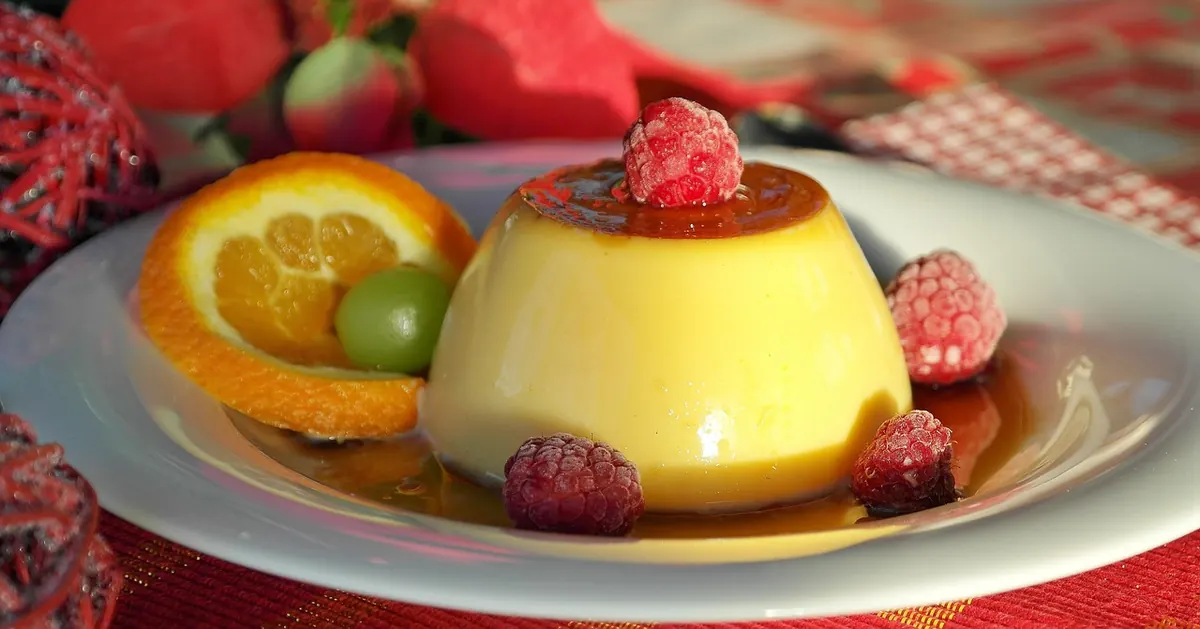
Photo: ingasocialmedia / Pixabay

Custard Around the World: Flan, Pasteis de Nata, and Japanese Purin
Flan, pastéis de nata, and Japanese purin share the same ingredients but split into three distinct...
How to Thicken Custard Without Eggs: Cornstarch vs. Gelatin
Cornstarch and gelatin both thicken egg-free custard, but they set in different ways. Compare texture,...
About Us