The History of Custard: From Medieval Puddings to Creme Brulee
Custard has survived from medieval banquet tables to modern dessert menus without changing its essentials: eggs, milk or cream, sugar, and gentle heat. The names changed, the crusts came and went, and someone invented a blowtorch, but the technique is stubborn. Here is how custard got from spiced pies and fasting-day almond milk to the ramekin on your table.
A Word That Meant the Pastry, Not the Filling
The word "custard" comes from the French crouste, or crustade — a tart with a crust. In medieval English kitchens a crustade was a pastry case filled with eggs and milk, sometimes sweet, sometimes studded with meat or fish. The word described the shell first and the filling second. As cooks began making the mixture on its own, in pots and bowls, the crust fell away and the name stayed. That is why "custard tart" is, strictly speaking, half redundant.
The drift is a common one in food language. "Pudding" once meant a sausage boiled in a stomach lining; "pastry" meant the dough before it meant the things made from it. Custard followed the same route from container to contents, and the older sense lingers in the French croustade and the Italian crostata, both of which still mean a crusted tart rather than the filling inside it.
Medieval Custard: Spice, Saffron, and Almond Milk
Medieval custard was not delicate. It was thick, heavily spiced, and often coloured: saffron for gold, cinnamon, mace, ginger and pepper for warmth. The great English manuscript collections of the fourteenth and fifteenth centuries include dishes called crustades and boiled creams, and later chroniclers list custard among the dishes at Henry IV's coronation feast in 1399.
Those banquet custards were often baked in a "coffin" — a sturdy, frequently inedible pastry case whose job was to hold the filling, soak up the fat, and act as a plate. Diners ate the contents and left the shell, or passed it down the table. The point was spectacle as much as sustenance: a custard could be coloured, layered or laced with dried fruit, and a single feast might serve several.
The church calendar shaped the recipe as much as taste did. On fast days eggs and dairy were off limits, so cooks made custard with almond milk thickened by rice flour or breadcrumbs. That Lenten version survives in the almond custards of Spain and the Middle East, where the same logic still holds: rich, set, and dairy-free.
From Pie Filling to Sauce
By the sixteenth and seventeenth centuries custard had split in two. One branch stayed in pastry: the custard tart, the quiche, the Portuguese pastel, and the pumpkin pie that English colonists built from a boiled pumpkin-and-milk dish. The other branch became a liquid. Recipe books began describing "boiled custard" — yolks and cream stirred over gentle heat until thick enough to coat the back of a spoon. A French cook calls that crème anglaise; an Italian cook turns the same idea into zabaione with wine instead of cream.
This is the custard most of us meet first, and it is also the base of ice cream, crème caramel and a hundred plated desserts. Learn to make it without scrambling it and a great deal of the pastry kitchen opens up. The two branches never really separated, either. A custard tart is a stirred custard that has been set; a crème brûlée is a baked custard treated like a tart. Same mixture, different hand.
Stirred and Baked: The Two Families
Almost every custard in the world belongs to one of two families, and knowing which one you are making prevents most disasters.
- Stirred custards are cooked on the stovetop and never fully set. Crème anglaise, zabaione, pastry cream, lemon curd and the base of most ice creams are all stirred custards. They thicken because the egg proteins unravel and link together, but they stay pourable.
- Baked custards are set in the oven in a water bath. Crème brûlée, crème caramel, flan, custard tarts, cheesecake and quiche are baked custards. Here the proteins form a delicate gel that holds its shape.
The enemy of both is the same: too much heat. Egg proteins coagulate at around 82°C (180°F), and past that point they squeeze out water and turn rubbery or scrambled. This is why custard recipes talk about gentle heat, why stirred custards come off the flame before they look done, and why baked custards sit in a tray of hot water — the water never gets hotter than boiling, and it buffers the ramekin from the oven's direct blast.
Strain it, skim it, and never let it boil. Half of custard-making is really just temperature management with a spoon.
Crème Brûlée and the French Correction
The caramelised top has a history of its own. The Spanish claim crema catalana, set with starch and scented with lemon and cinnamon, burnt with a hot iron rod. The French claim crème brûlée, richer and set with yolks alone, and it appears in print by the late seventeenth century under names such as crème brûlée and the English "burnt cream". Trinity College, Cambridge, has served a version since the eighteenth century and is still arguing about it.
Whatever the national origin story, the modern dish owes its popularity to two pieces of twentieth-century equipment: the blowtorch, borrowed from the workshop, and the restaurant's habit of chilling custards in advance and torching them to order. The sugar melts, darkens and hardens into a glass sheet in under a minute — a piece of theatre that happens to be delicious.
Custard Around the World
Once you know the pattern, you start seeing it everywhere:
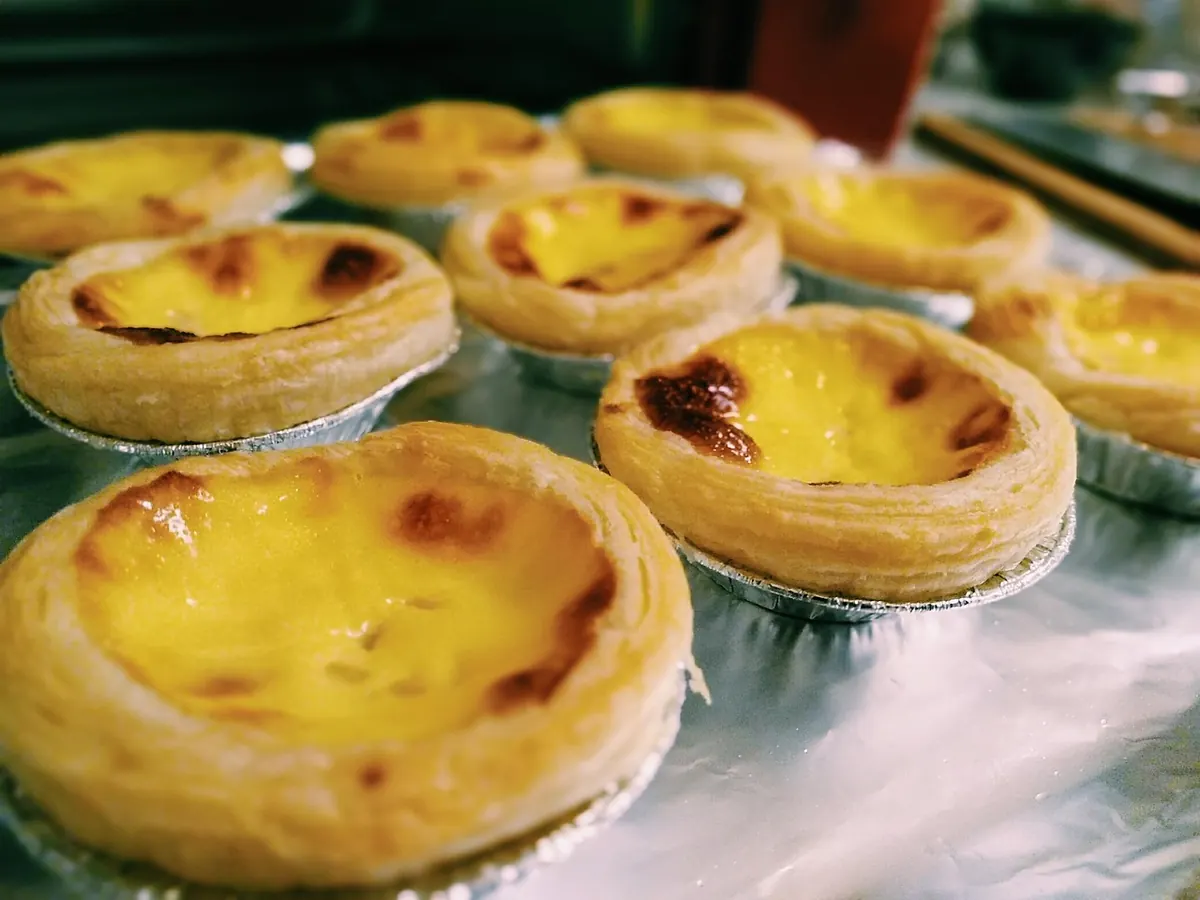
- Portugal: pastéis de nata, baked hot and fast so the custard blisters and the pastry shatters.
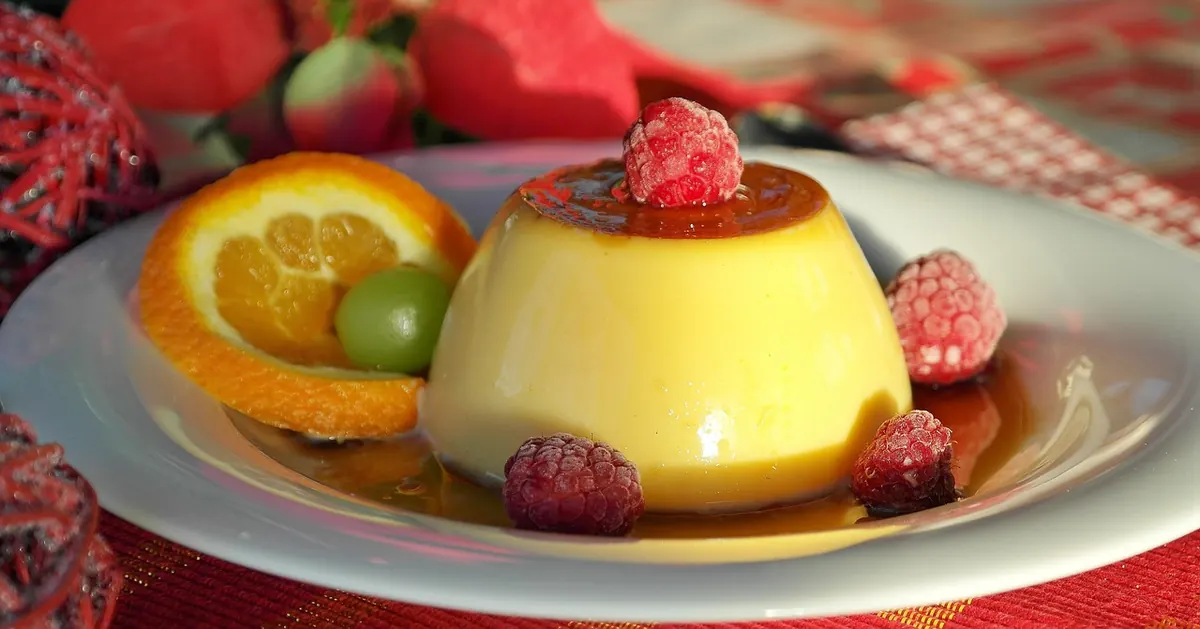
- Spain: flan and crema catalana, the first set with caramel in the mould.
- France: crème anglaise, crème pâtissière, crème caramel and crème brûlée — an entire grammar of custard.
- Britain: the custard tart, the baked egg custard, and pouring custard, sold in tins since the nineteenth century.
- Asia: Japanese purin, Chinese egg tarts, and Thai sangkhaya, a coconut custard steamed inside a squash.
- The Middle East: almond and rosewater custards that descend directly from the fasting-day versions.
Why It Endures
Custard has lasted six hundred years because it is cheap, adaptable and forgiving up to a point. Four ingredients, no special equipment, and a technique that rewards attention rather than talent. It scales from a single ramekin to a banquet, it can be flavoured with almost anything, and it can be made in advance — the cook's real luxury.
The medieval cook adding saffron to a spiced crustade and the home baker sliding a pan of water into the oven are doing the same thing: coaxing eggs and cream into a set firm enough to hold a spoon and soft enough to melt on the tongue. The pastry case is optional. The principle is not.
Photo: romjanaly / Pixabay
Custard Around the World: Flan, Pasteis de Nata, and Japanese Purin
Flan, pastéis de nata, and Japanese purin share the same ingredients but split into three distinct...
How to Thicken Custard Without Eggs: Cornstarch vs. Gelatin
Cornstarch and gelatin both thicken egg-free custard, but they set in different ways. Compare texture,...
About Us