How to Thicken Custard Without Eggs: Cornstarch vs. Gelatin
How to Thicken Custard Without Eggs: Cornstarch vs. Gelatin
Eggs thicken custard twice over: the proteins coagulate as the mixture warms, and the yolks add fat that makes the whole thing taste rich. Take them out and you have to replace both the thickening and the body. Cornstarch and gelatin are the two most common egg-free answers, and they could hardly behave more differently. One needs heat and stays soft and opaque; the other needs cold and turns firm and glossy. Knowing which one your custard actually wants is most of the work.
What Eggs Were Doing in the First Place
Egg yolks set a custard by coagulating at around 80°C, which is why a classic custard is cooked gently and pulled off the heat before it boils. The result is opaque, tender, slightly eggy, and it holds its shape at room temperature.
Starches and gelatins thicken by entirely different means. Starch granules absorb liquid and swell with heat, releasing starch that traps water. Gelatin proteins unwind in warm liquid, then link back into a fine network as they cool. That single difference explains almost every practical rule that follows.
Cornstarch: Thickening on the Stove
Cornstarch comes closest to replacing the yolks' raw thickening power, but only if you cook it properly. It has to be dispersed in cold liquid first—drop it into hot milk and you get lumps—then brought to a bare simmer.
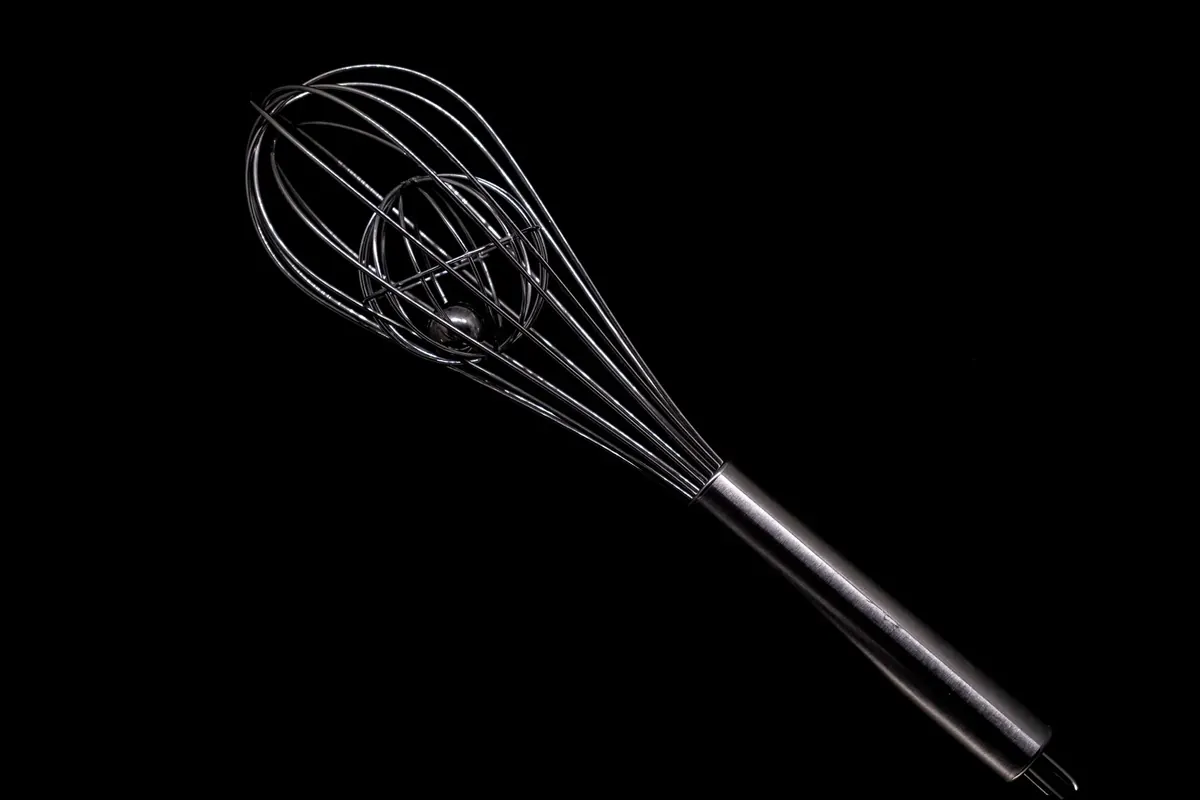
A slurry is the simplest insurance. Whisk the cornstarch with a few tablespoons of cold milk, water, or plant milk until it looks like thin cream, then whisk that into the rest of the liquid before it goes on the heat. If you are making a custard with sugar, whisk the sugar into the dry cornstarch first, or add it to the liquid; either way, do not let the starch sit in hot liquid without stirring.
Once the mixture reaches a bare simmer, keep it there for about one minute. This is not optional. Cornstarch needs heat to gelatinize fully, and undercooked custard tastes raw and chalky and will stay thin no matter how long you chill it. Stir constantly, scraping the bottom and corners of the pan. When the whisk leaves a clear trail and the mixture coats the back of a spoon, it is ready.
Ratios matter. For a pourable sauce, use about 1 tablespoon of cornstarch per cup of liquid. For a soft pudding or fruit tart filling, use 1 1/2 to 2 tablespoons per cup. For a firm, sliceable custard, you can go up to 3 tablespoons per cup, but be careful: too much starch turns the texture gluey and masks the flavor. A good starting point for an egg-free vanilla pastry cream is 2 cups of milk, 1/4 cup of cornstarch, 1/2 cup of sugar, a pinch of salt, 2 tablespoons of butter, and 1 teaspoon of vanilla. Cook it as above, then stir in the butter and vanilla off the heat. Chill it with plastic wrap pressed to the surface so it does not form a skin.
Cornstarch has limits. It is opaque, so it will never look like a glossy egg custard. It can taste starchy if undercooked or used in excess. It also does not like acid: lemon juice, vinegar, or fruit purees can thin it if added early or held hot for a long time. Add acidic ingredients after the starch has fully cooked, and taste before adjusting.
What Cornstarch Is Best For
- Pourable vanilla sauce, lemon curd-style fillings, and pudding.
- Fruit tart fillings and pie fillings where an opaque, soft set is welcome.
- Vegan or dairy-free custards, since it works with oat, soy, almond, or coconut milk.
- Custards that need to sit at room temperature for a while, because a starch gel holds better than gelatin when warm.
Gelatin: Setting on the Chill
Gelatin works in reverse. It does not thicken much while hot; it sets as it cools. That makes it perfect for molded custards, panna cotta, and any dessert that should be glossy, firm, and clean-tasting. Gelatin is made from animal collagen, so it is not vegetarian. If that matters, agar-agar is the usual substitute, though agar sets firmer and more brittle, and it must be boiled to activate.
To use powdered gelatin, bloom it first. Sprinkle it over a few tablespoons of cold water or cold milk and let it sit for 5 to 10 minutes, until it looks like a spongy mass. Then warm the rest of the liquid, add the bloomed gelatin, and stir until it dissolves completely. Do not boil gelatin for long periods; excessive heat can weaken its setting power. Once the gelatin is fully dissolved, pour the custard into molds or glasses and refrigerate for at least 4 hours, preferably overnight.
A common ratio is 1 teaspoon of powdered gelatin per cup of liquid for a soft, silky set, and up to 1 1/2 teaspoons per cup for a firm, sliceable one. For a simple egg-free panna cotta, warm 2 cups of milk or cream with 1/3 cup of sugar and 1 teaspoon of vanilla. Bloom 2 teaspoons of gelatin in 1/4 cup of cold water, add it to the warm mixture, stir until dissolved, and chill. The result is glossy and delicate, with a melt-in-the-mouth quality that cornstarch cannot match.
Gelatin has its own pitfalls. Some raw fruits—pineapple, papaya, kiwi, and ginger—contain enzymes that break down gelatin and prevent a set. Cook those fruits first, or use them only as a topping. If the gelatin is not fully dissolved, you will get rubbery threads. If you use too much, the custard turns bouncy rather than tender. And because gelatin melts at body temperature, a gelatin-set custard will soften quickly in a warm room.
What Gelatin Is Best For
- Molded custards, panna cotta, and silky cold desserts.
- Glossy fillings for cakes and tarts where a clean cut matters.
- Layered desserts, because it sets firmly enough to hold its shape.
- Custards that will be served very cold and should melt on the tongue.
Cornstarch vs. Gelatin: The Practical Differences
Custard Around the World: Flan, Pasteis de Nata, and Japanese Purin
Flan, pastéis de nata, and Japanese purin share the same ingredients but split into three distinct...
The History of Custard: From Medieval Puddings to Creme Brulee
Custard began as a spiced medieval pie filling and ended up as crème brûlée. Trace how eggs, milk and...
About Us